Centre Tweaks Vehicle Scrapping Rules, Automakers Escape Potential Multi-Crore Financial Burden
· Free Press Journal
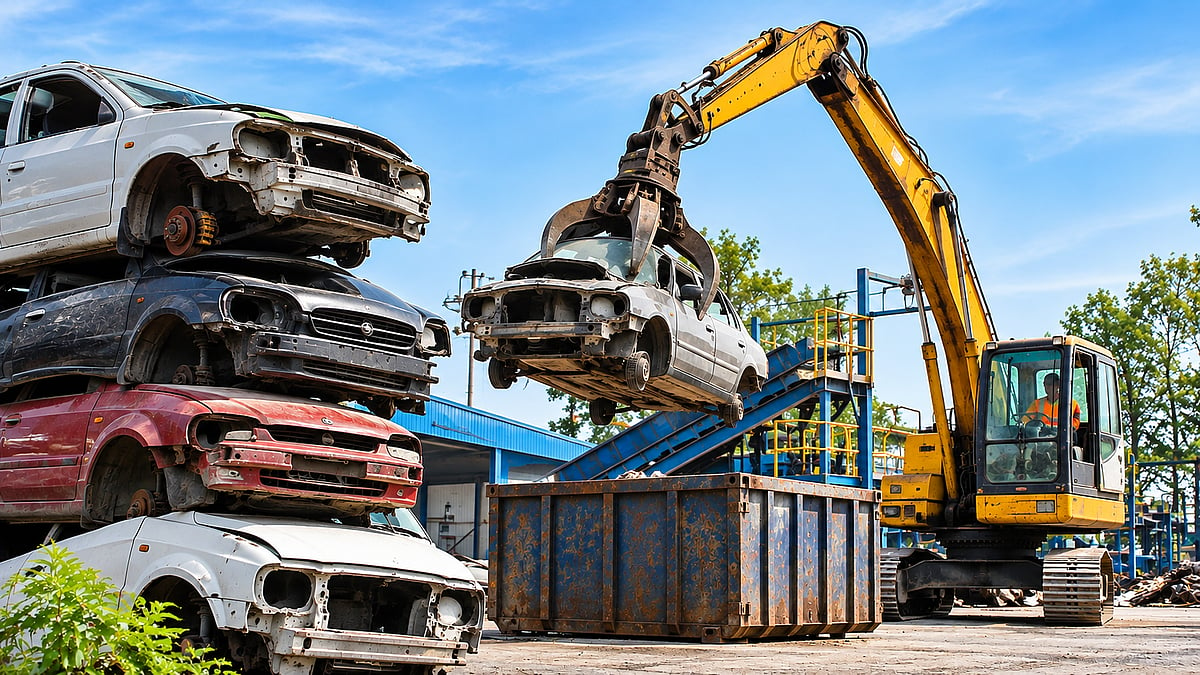
New Delhi: In a significant relief for India's automobile industry, the government has amended vehicle scrapping regulations, clarifying that operational automakers will not be required to recognise future recycling obligations as current liabilities.
The move is expected to ease financial pressure on automobile manufacturers while ensuring compliance with environmental sustainability and vehicle recycling norms.
Visit newsbetting.club for more information.
Central Railway Boosts Automobile Freight:- First NMG Rake Loading Commences at Igatpuri Goods ShedRegulatory Relief
The Ministry of Environment, Forest and Climate Change has notified amendments to the Environment Protection (End-of-Life Vehicles) Rules, 2025, revising manufacturers' responsibilities under the Extended Producer Responsibility (EPR) framework.
Automakers had raised concerns that the earlier regulations, combined with accounting standard Ind AS 37, could require substantial financial provisions for future vehicle scrapping obligations. Industry estimates suggested that such provisions could collectively run into tens of thousands of crores.
Revised Compliance Norms
Under the amended vehicle scrapping rules, liabilities arising from unfulfilled EPR commitments will become applicable when a manufacturer permanently ceases operations.
Upon closure, manufacturers must submit details of transport vehicles introduced into the market over the preceding 15 years and non-transport vehicles over 20 years. The Central Pollution Control Board (CPCB) will assess and determine outstanding recycling obligations.
EV Sales Hit Record High As India's Automobile Retail Market Records 31.72 Lakh Vehicle Sales, Rising 25% Month-On-Month In OctoberVehicle Recycling Framework
The End-of-Life Vehicles Rules, effective from April 1, 2025, mandate automobile manufacturers to meet annual vehicle scrapping targets linked to historical vehicle sales.
Companies can fulfil these requirements by purchasing EPR certificates from registered vehicle scrapping facilities through a centralised online portal. These certificates are generated based on the quantity of steel recovered from discarded vehicles, supporting sustainable resource utilisation and the circular economy.
Financial Impact
The regulatory amendment is expected to reduce uncertainty surrounding the balance sheets of automobile companies and prevent substantial upfront provisioning requirements under the earlier interpretation. Industry observers believe the revised framework strikes a balance between financial stability and environmental accountability.
While automakers will continue to meet annual recycling targets, the clarification provides greater accounting certainty without diluting the government's broader objective of promoting responsible vehicle disposal, material recovery and sustainable automotive manufacturing across India.
Level up your brain the fun way. Play daily games and quizzes on FPJ Smart!