Pahalgam Terror Attack: Chinese Satellites Doubled Surveillance Passes Over Kashmir Days Before Killings, Report Says
· Free Press Journal
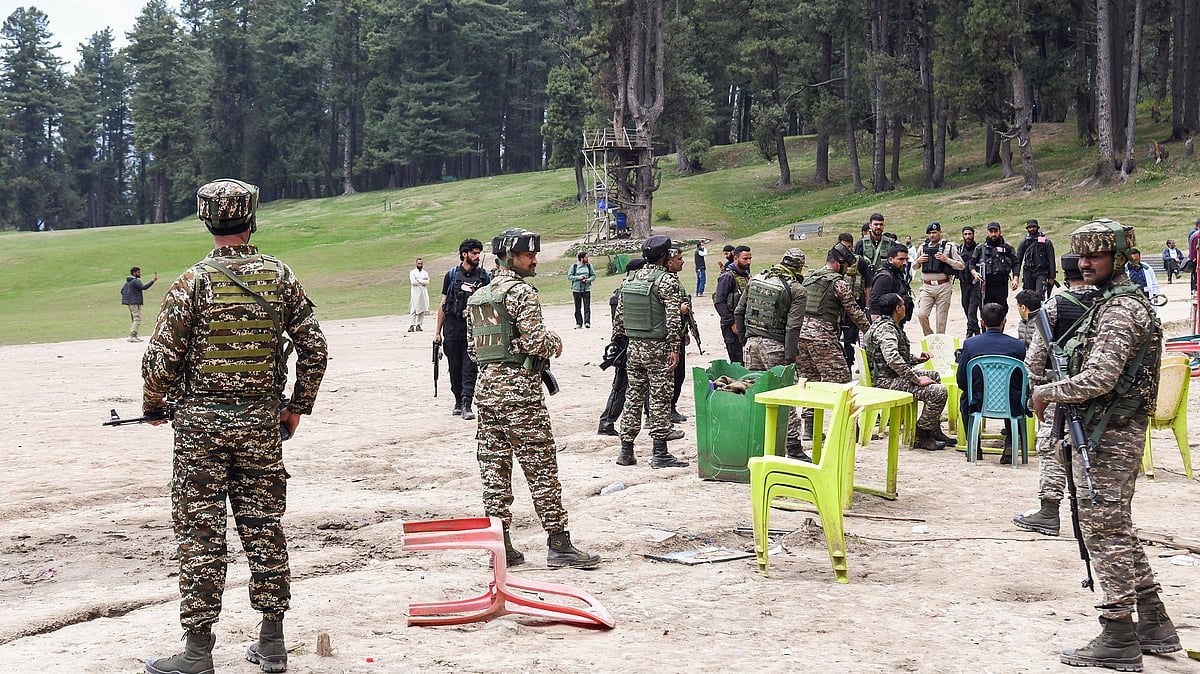
Chinese Earth-observation satellites reportedly carried out 37 unusual orbital manoeuvres around the time of the April 22, 2025, terror attack in Jammu and Kashmir's Pahalgam, which claimed 26 lives, mostly tourists. The movements allegedly increased satellite coverage over Pahalgam and several surrounding areas, raising questions about China's space-based surveillance activities in the region.
Visit h-doctor.club for more information.
According to an exclusive report by ThePrint, published on November 23, 2026, the findings emerged from an analysis conducted by Bengaluru-based space surveillance startup Digantara. The company tracked Chinese space objects and identified orbital adjustments that appeared to increase observation opportunities over the region between April 15 and April 30, 2025.
The analysis examined 1,332 Chinese space objects, of which 190 carried out at least one orbital manoeuvre during the period. However, 37 manoeuvres stood out because they altered satellite trajectories in ways that increased coverage over Pahalgam and other strategically significant locations in Jammu and Kashmir.
The findings point to unusual satellite activity in the days surrounding the terror attack. However, they do not establish any direct connection between the manoeuvres and the attack or prove Chinese involvement in the incident.
Chinese Satellites Increased Surveillance Over Pahalgam Before Attack
As detailed in ThePrint's report, one of the significant orbital adjustments took place on April 16, 2025, six days before the Pahalgam terror attack.
The Chinese Yaogan-35 01A satellite reportedly altered its orbit, resulting in a doubling of the number of passes it made over Pahalgam. The adjustment increased its opportunities to observe the area in the days leading up to the attack.
The Yaogan satellite series is officially described by China as serving purposes such as scientific experiments, land surveys, environmental monitoring, agricultural assessments and disaster prevention. However, analysts have long associated several satellites in the series with China's military intelligence, surveillance and reconnaissance capabilities.
According to the analysis cited by ThePrint, the unusual adjustments suggest that the satellites' observation patterns over the region were being deliberately modified.
Yaogan-39 Satellites Made Orbital Adjustments On Day Of Attack
The report also highlights unusual movements involving two Chinese satellites, Yaogan-39 01B and Yaogan-39 01C, on April 22, 2025, the day of the Pahalgam terror attack.
According to Digantara's analysis, the two satellites carried out orbital manoeuvres at approximately 5:14 pm and 5:59 pm, respectively, after the killings had taken place.
These adjustments reportedly increased their subsequent observation opportunities over Pahalgam. Their coverage also extended to other locations in Jammu and Kashmir, including Srinagar, Gulmarg, Sonamarg and Jammu.
The satellites generally cover a much wider geographical area, including India, Pakistan, Nepal, Bangladesh, China, Myanmar, Thailand and parts of the Indian Ocean.
The orbital adjustments therefore drew attention because they appeared to alter the satellites' observation patterns to include specific locations in Jammu and Kashmir.
Satellite Activity Increased Again After Pahalgam Attack
The unusual satellite activity reportedly continued in the days following the attack.
According to the findings cited by ThePrint, Chinese Low Earth Orbit (LEO) satellites recorded a significant increase in orbital manoeuvres towards the end of April 2025.
The activity reportedly peaked on April 29, when 37 manoeuvres were recorded, followed by another 31 on April 30.
LEO satellites operate relatively close to Earth and can be particularly useful for high-resolution imaging and detailed observation of specific geographical areas.
The analysis also identified unusual activity involving China's experimental geostationary satellite Shijian-20, also known as SJ-20.
On April 16, the satellite reportedly reduced its orbital drift rate from approximately 0.54 degrees per day to 0.047 degrees per day. This adjustment stabilised its position and potentially improved its observation opportunities over the southern Indian subcontinent and the Indian Ocean.
What Do Satellite Orbital Manoeuvres Mean?
A satellite orbital manoeuvre refers to a controlled adjustment in a satellite's orbit, direction or speed. Such changes are generally carried out using onboard propulsion systems operated through commands from ground stations.
These adjustments can alter when and how frequently a satellite passes over a particular location, allowing it to obtain different viewing angles or increase observation opportunities over a targeted area.
In the case of Earth-observation satellites, orbital manoeuvres can help improve coverage of strategically important locations.
The Yaogan satellite series, which began in 2006, is officially described by Beijing as being used for scientific research, land surveys, crop estimation, environmental monitoring and disaster prevention.
However, several satellites in the series are believed by Indian and Western analysts to have military applications, particularly in intelligence, surveillance and reconnaissance (ISR).
Depending on their equipment, these satellites can collect optical imagery, Synthetic Aperture Radar (SAR) data and signals intelligence. SAR technology is particularly useful because it can capture images at night and through cloud cover.
Does Satellite Activity Suggest Chinese Involvement In Pahalgam Attack?
The unusual orbital manoeuvres have raised questions about whether Chinese satellites were monitoring developments in Jammu and Kashmir around the time of the attack.
As per the report, sources familiar with the analysis suggested that the satellite movements could potentially indicate intelligence-gathering activities, including monitoring security force movements or assessing routes in the region.
Digantara's scientists reportedly indicated that the adjustments were likely pre-planned rather than random orbital changes.
However, the findings do not establish that the satellites were directly connected to the April 22 terror attack. They also do not prove that China provided intelligence, surveillance support or any assistance to the perpetrators.
The possibility of strategic messaging or intelligence collection has been discussed in the report, but the precise purpose of the manoeuvres remains unconfirmed.
China's Space Cooperation With Pakistan Also Under Scrutiny
The report also places the findings in the broader context of China's growing space cooperation with Pakistan.
Trump Claims Credit For Jensen Huang’s Nvidia Return; US Lawmakers Continue Probe Into China Chip Smuggling Concerns | VideoAccording to the report, Pakistan launched six satellites between January 2025 and June 2026, with China providing technical and launch assistance for five of them.
ThePrint's earlier reporting had also highlighted an increase in requests for commercial satellite imagery of the Pahalgam region from a US-based company in the weeks preceding the April 2025 attack.
The latest findings form part of what ThePrint describes as a three-part investigation into China's space-based surveillance activities and their implications for India's national security.
While Digantara's analysis identifies unusual satellite movements around the time of the Pahalgam attack, the findings remain an assessment of orbital activity and do not establish a direct operational link to the terror incident.
Level up your brain the fun way. Play daily games and quizzes on FPJ Smart!