BJP-SAD Tie-Up In Punjab: An Alliance Of Compulsions
· Free Press Journal
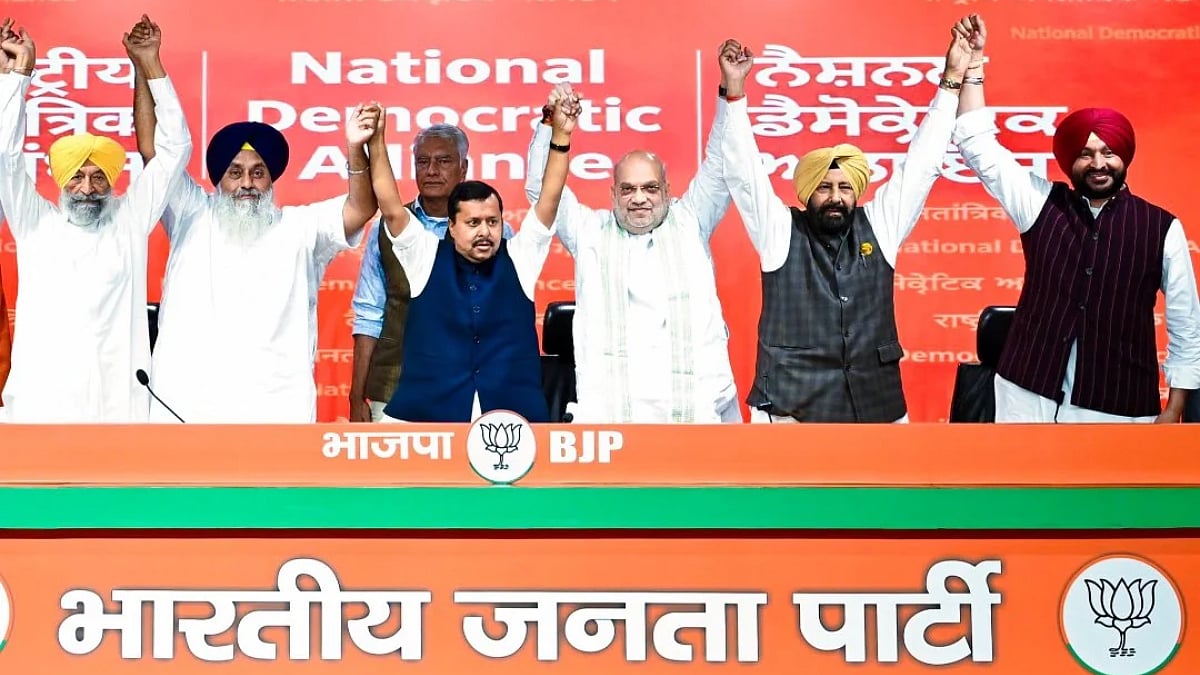
Politics is the art of the possible. The revival of the Shiromani Akali Dal (SAD)-Bharatiya Janata Party (BJP) alliance ahead of the 2027 Punjab Assembly elections should be viewed in this context. After six years of estrangement, the two parties have decided to bury their differences and join hands again.
Their decision is less an expression of ideological affinity than an admission of political necessity. Both have realised that fighting separately could leave them with little political future in Punjab. Traditionally, Punjab was a two-party state, with the Congress and the Akali Dal alternating in power.
Visit mwafrika.life for more information.
The emergence of the Aam Aadmi Party (AAP) five years ago disrupted this arrangement. It swept the Assembly elections, reducing both traditional parties to the margins. However, AAP’s eclipse in Delhi and its failure to capture the imagination of voters in Haryana have inevitably affected its standing in Punjab, where it is now facing growing political challenges.
The Congress, meanwhile, has reasons to feel encouraged. Its growing popularity and the increasing visibility of Rahul Gandhi have become matters of concern for the other parties.
They fear that a resurgent Congress could regain the political ground it lost. The Akali Dal-BJP understanding, therefore, can also be seen as an attempt to prevent the Congress from returning to power.
The circumstances that led to the earlier rupture between the allies, however, cannot be brushed aside. The three farm laws enacted by the Narendra Modi government became a major issue in Punjab.
The Akali Dal, which had initially supported the legislation in Parliament, was forced to withdraw from the National Democratic Alliance (NDA) in September 2020 when farmers rose in revolt.
It had to distance itself from the BJP to save its political face. Six years later, the fundamental differences have not necessarily disappeared. There is little evidence that the average Punjabi farmer has forgotten the bitterness of that period or is ready to endorse the reunion.
The questions of farmers’ interests, minimum support price, and the political handling of the agitation cannot be wished away by announcing an alliance. Nor is the BJP in particularly robust health.
The results of the recent panchayat elections in neighbouring Rajasthan should remind it that electoral success cannot be taken for granted. Punjab, with its distinctive political and agrarian character, presents an even more complicated challenge.
The two parties may have agreed to contest together, with the Akali Dal as the senior partner, but an electoral understanding does not automatically translate into popular acceptance.
Their reunion should be seen less as the beginning of a new political chapter than as an attempt by two vulnerable parties to avert a common disaster. Whether voters will rescue them is another matter altogether.
To get details on exclusive and budget-friendly property deals in Mumbai & surrounding regions, do visit: https://budgetproperties.in/