‘Totally involved’: Trump says ‘I convinced’ Nvidia’s board to reinstate Jensen Huang
· Fortune
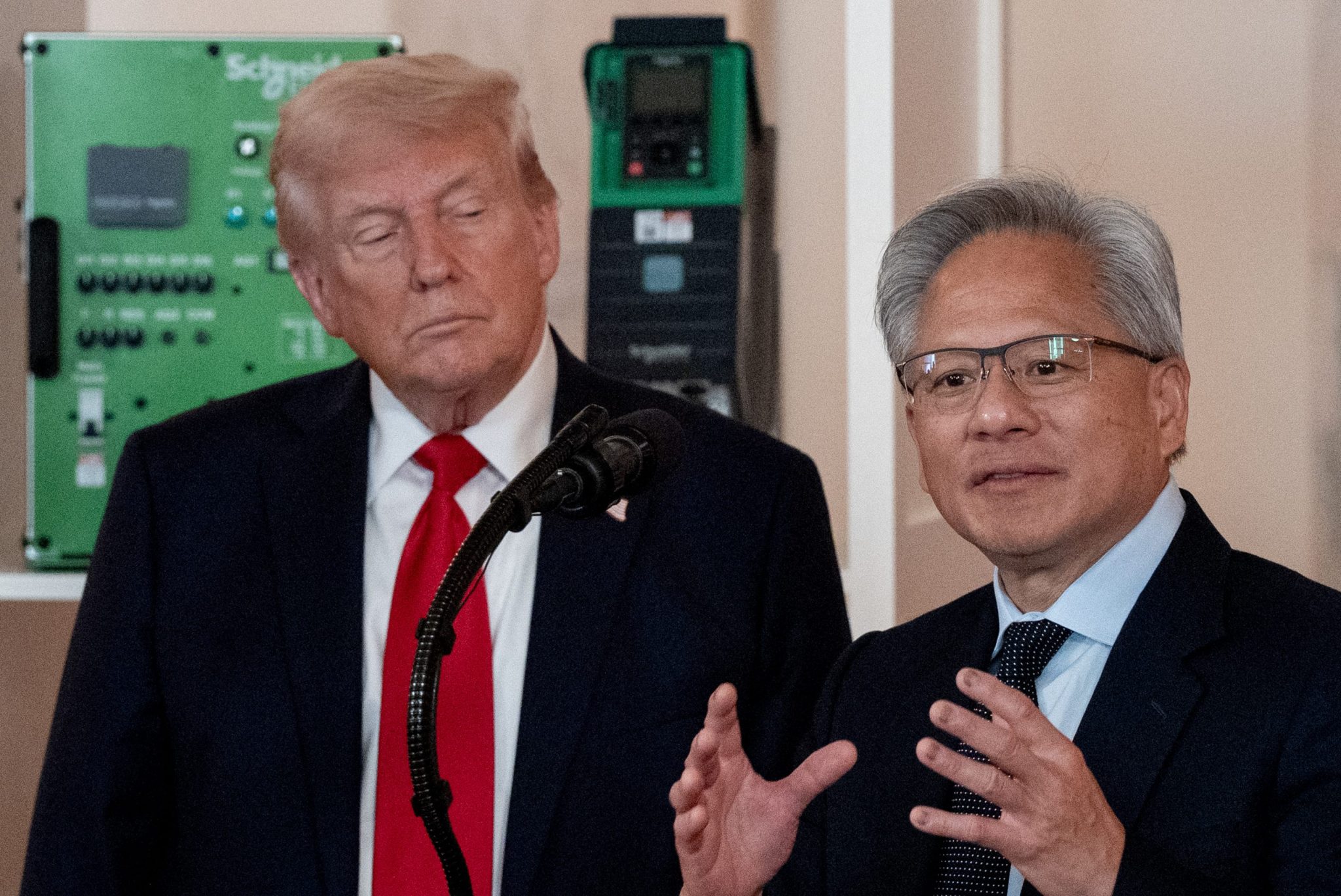
The White House is taking credit for putting Jensen Huang back in charge of Nvidia.
Visit librea.one for more information.
“President Trump was totally involved and this is a great decision by the NVIDIA board. We have to protect our geniuses,” White House communications director Steven Cheung told Fortune.
But that’s just the White House—the president is saying he was the one to convince the board to bring him back.
“I spoke to them, let me put it that way,” he told CNBC’s Eamon Javers in a phone interview Monday.
“And I convinced them.”
Nvidia announced Monday that Huang is again its president, CEO and a board member. The company said directors voted unanimously after input from senior levels of the U.S. government left them confident his return poses no national security risk. The board reportedly met late Sunday night, just as the president posted hours earlier that he hoped the board would rehire Huang.
On CNBC, he said directors “did ask for assurance on the national security threat.”
“And we gave them assurances at least with everything we know, and we know a lot,” Trump said. The president did not say whether he dialed into the meeting himself, but he did say he was “represented” there.
“I’m very, very happy that the company had the courage and the board had the courage to do the right thing, and they suffered for two weeks, and the company suffered greatly,” the president told CNBC.
Statesmen or shareholder?
Trump in recent days has said he would like to see the return of Huang to Nvidia, adding that the former CEO “did nothing wrong.”
“People say, is it a threat to have him? No, it’s a threat to lose him,” Trump said. “The Country needs Jensen’s leadership at NVIDIA in order to ensure the Success and Prosperity of not only the Company, but the American Economy,” he wrote on Truth Social.
That leaves the question of whether Trump was acting as a statesman or a shareholder. By the end of last year, Nvidia was one of his three largest individual stock holdings, worth between $12.5 million and $58 million. His latest disclosure shows he bought as much as $380,000 in Nvidia shares weeks before the scandal that led to Huang’s resignation. Nvidia’s stock surged 34% on Monday following the news. Asked whether the market’s fall after Huang’s resignation factored into his push, Trump said, “Probably so, but the bigger impact was the long term.”
The White House says Trump doesn’t control those trades. A spokesperson told CNBC that outside advisers run the president’s holdings with no direction from him, and a Trump Organization spokesperson said the setup is meant to “avoid even the appearance of a conflict of interest.” The disclosures offer no evidence that Trump directed the trades or that his advisers had access to classified intelligence.
Ethics lawyers say that doesn’t settle it. Richard Painter, the chief White House ethics lawyer under President George W. Bush, told Newsweek the holdings raise two concerns: that Trump or his appointees may pursue policies that raise the stocks’ value, and “the risk of trading on the basis of material nonpublic government information.” Federal conflict rules don’t formally bind the president, but longstanding Office of Government Ethics guidance says presidents should act as though they did.
Huang resigned on Nov. 12 after reports of multiple affairs, including two with Nvidia employees and one with Alice Huang, a Chinese businesswoman. The New York Times reported that US intelligence suspects her of being a Chinese spy, which Beijing denies. Last week, board chair Harvey Jones said on Nvidia’s earnings call that the board did not intend to reinstate him.
Still, for Trump on Monday, the goal was to keep Huang in charge.
“The bigger impact was, you know, he’s got other chips in his brain that nobody else knows about,” Trump said on CNBC.
This story was originally featured on Fortune.com