Bavuma aiming to extend incredible Test captaincy win record in tough England series
· Citizen
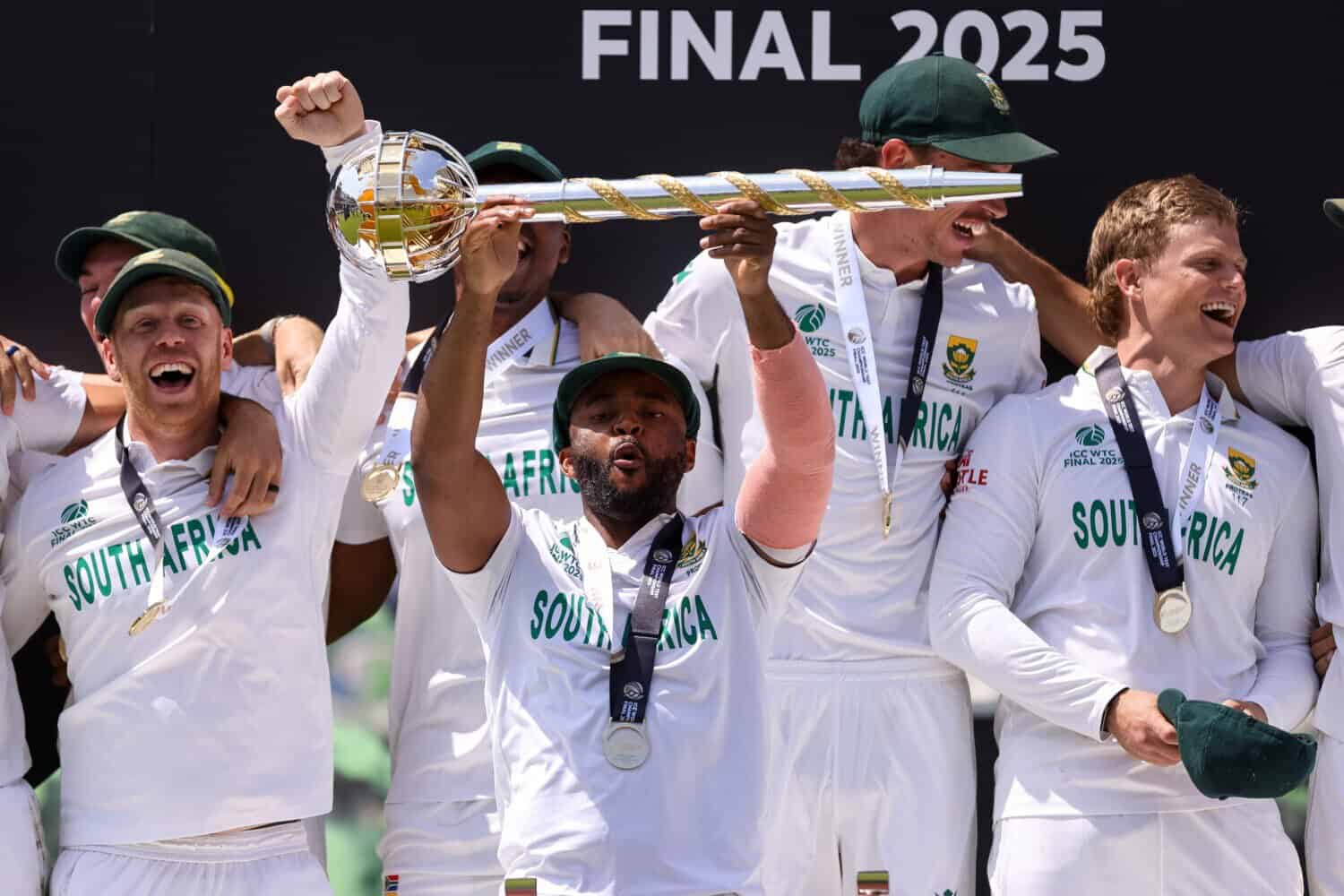
Proteas captain Temba Bavuma will be fresh and ready to try and extend his incredible Test captaincy record when South Africa welcome England to the country for their three Test series starting next month.
On Thursday Bavuma claimed his 14th win as Proteas captain, when his team trounced Bangladesh by nine wickets at the Wanderers in Johannesburg, from his 16th game in charge of the side. He has suffered just one loss, in the recent 2-1 series win over Australia, and one draw, against the West Indies in 2024.
Visit newsbetting.bond for more information.
However, a calf strain picked up while batting in the first innings against Bangladesh earlier this week has ruled him out of the second Test starting on Monday at SuperSport Park in Centurion, which robs him of a chance of extending his record, as the Proteas will be hot favourites for another good win.
Unbelievable record
Bavuma’s win record as captain is an unbelievable one.
Only three Proteas captains have better win records than him, but all of them have only captained one game, with Buster Nupen in 1930, and Wiaan Mulder and Keshav Maharaj, both last year, winning their solitary games in charge of the team.
Just 17 players in history have captained the Proteas 10 or more times, and on that list, Bavuma is head and shoulders above everyone else with an amazing 87.5% win ratio.
Only two other captains in that group crossed the 50% mark, with Shaun Pollock at 53.84% from 26 games as captain and Hansie Cronje with 50.94% from 53 matches leading the Proteas.
Graeme Smith, who is the overall longest serving Test captain in terms of games, and is the only player to have captained a team more than a hundred times, had a 49.07% win ratio with the Proteas from 108 matches.
At 36-years-old Bavuma likely doesn’t have more than three or four more years left playing international cricket, so he will probably eclipse Pollock (26 games in charge) on the captaincy list, but it remains to be seen if he can catch Faf du Plessis in third with 36 matches as captain, while he can’t reach Cronje (53 matches in charge) or Smith.
He’s sure to pass at least Kepler Wessels (also 16 in charge) and Dean Elgar, 18 in carge.
However, the big question will be how high of a win percentage he will have by the end of his international career, as it is highly unlikely the Proteas will be able to continue their absurd winning ratio under him going.
Fighting ability
Speaking after their win over Bangladesh on Thursday, Bavuma was asked about the Proteas’ ability to fight back from difficult positions and most of the time come out on top with a win.
In the first Test against Bangladesh, for example, it was the first time in history that they had conceded 400 runs in the first innings of a Test at the Wanderers, and gone on to win.
“It is a strength of ours, but it can also be a bit of a weakness (letting teams get ahead). It’s a frustrating bit about us as a team. I think for us it’s more from a mental point of view, about staying in the game and being hell bent on making sure that the result stays in our favour,” explained Bavuma.
“There are strengths within our batting and strengths within our bowling and then it’s about someone being able to make a play for the team and get us into these types of (winning) positions.”
With the win over Bangladesh moving the Proteas top of the World Test Championship standings, and well on course to defend the Test mace they won after beating Australia in the final last year, Bavuma was asked about the pressure on him as a captain to keep winning.
“Pressure is always there. I think it is just about how you frame it in your own mind. I think expectations are going to keep rising in terms of what we are doing as a team,” he said.
“But I think for us, how we try and deal with it is to try and stay focused internally on whatever we are looking to achieve.”
Bavuma is expected to be back to lead the Proteas in the three-Test series against England, with Tests in Joburg, Centurion and Cape Town from 17 December to 7 January.