Long Wave
· The Atlantic
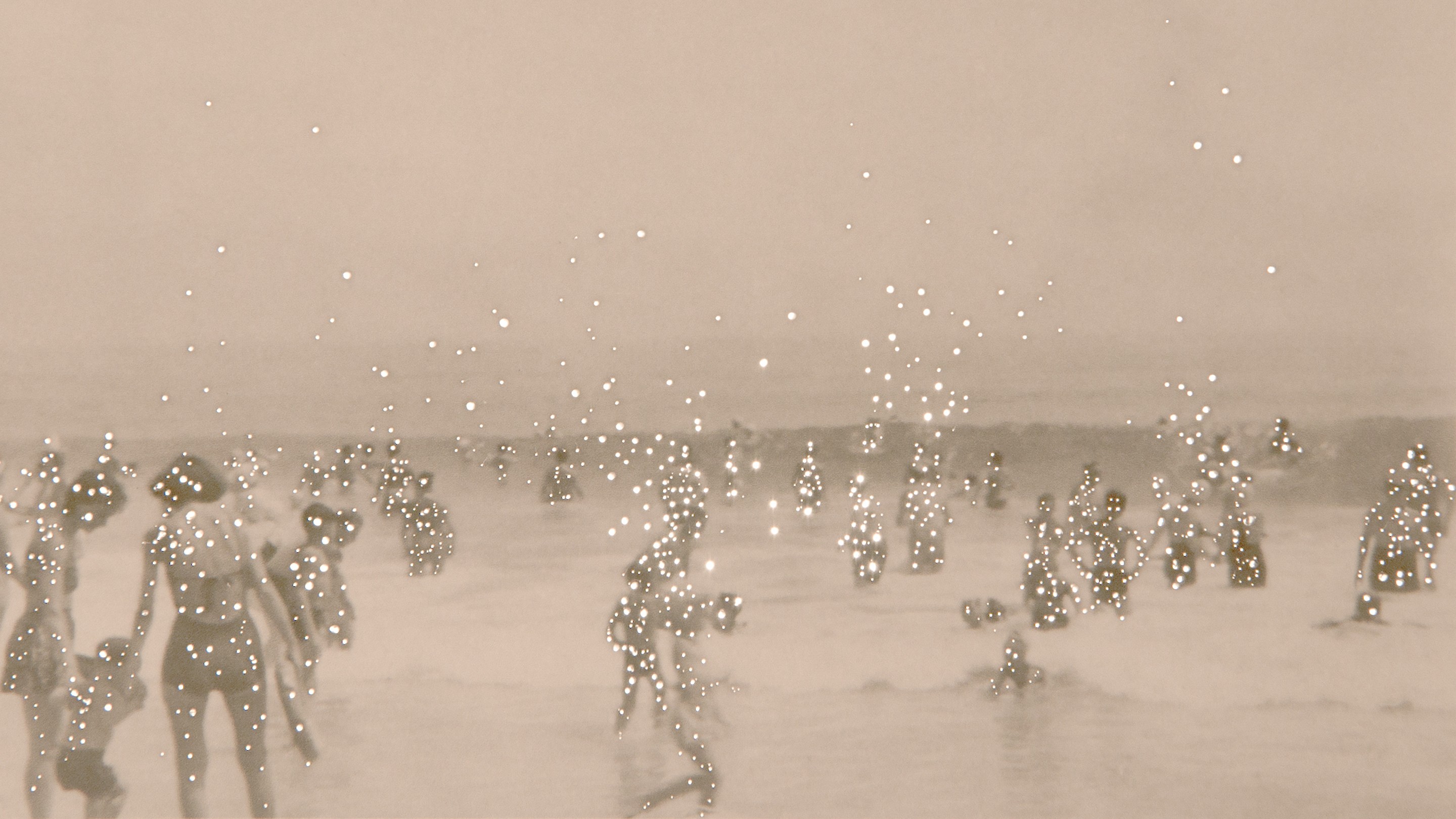
Ruth sets the children to dig for coins under the cushions of the ratty green sofa while she tries to get enough swimsuits and towels together. There is a big chest of drawers JP dragged home gleefully one evening, the scraping sound of her approaching, hollering for help. One of the other women, Sally, took it out into the concrete yard and sanded it down, repainted it, and then stenciled red flowers around the edges. As the women chopped carrots and argued about the rota, the children sneaked out at dusk and stuck their hands in the paint pot, left prints all over the front of the drawers. They get kids’ clothes from boxes on the street, charity sales and donations, and none of them fit right or they give way almost immediately at the seams but get shoved, nonetheless, into the chest of drawers and tugged out at random to put on whichever child needs them. Ori likes to go in by herself and dig thoughtfully through, chucking rejected dungarees and tie‑dye T‑shirts over her shoulder, plopping down on her backside to wrangle on leggings. Most of the swimsuits are nearly see-through from washing, the straps snapped, but Ruth manages to find enough and takes a handful of towels off the banister, puts them into the bag. The sun cream is out of date but will do the job.
When she gets back into the sitting room, the cushions have been heaved off the sofa and everyone is bouncing on the wheezing springs. They have uncovered crushed breadsticks and molding apple cores but also a handful of lost 20-pence pieces, just enough for them all to get into the lido if she lies about some of their ages. She has been working all week, but today she is in charge. Ori rushes over and burbles something about jumping as high as the trees like a bird—no, like a dragon—and then tugs a pirate hat down as far as it will fit onto Ruth’s head.
Visit esporist.org for more information.
Let’s go, let’s go, she shouts, and everyone gathers, grabbing at shoes. There is Ori, who is 3—dressed this morning in a rainbow unicorn outfit with a wilting horn and a grubby tail—and Nora, with her shoes on the wrong feet, and Leo, who is 9 and an expert at making mayonnaise-and‑cheese sandwiches and wrapping them in foil. Last time they went to the lido he stole a rubber ring and he wears it slung around his middle now, hitching it up with one hand when it slithers down to his knees. There is also Bee, who is nearly 2 and who Ruth puts up on her hip to get out the door, and Tsembi, who is 7 and has a younger brother, Douglas, who bends to shit in his nappy beside the step, grunting intently.
Sally has been making planters out of pallets to try to make some more money and they are stacked up outside the house with for sale signs pinned to them. Ruth and the kids make it down to the path and go in a ragtag, snaky line away from the house, Ruth yelling hold hands, hold hands, until everyone is pinned to someone else and trailing along. There isn’t enough cash for the bus. They’ll walk. Ruth hitches Bee onto her shoulders and Leo and Tsembi take turns carrying Douglas. The walk takes a long time. She changes Douglas’s nappy while the others climb onto the back of a bus-stop bench and compare war wounds. Douglas’s shit is runny and filled with little white worms again. It won’t be long before the others get them too. Ori is yelling loudly about being the fastest, fastest, fastest one and twisting back and forth to show off her scrapes and bumps, her multiple Moomin Band-Aids, which are grubby and starting to peel. Leo is hanging near her, his fingers beginning to tap a little in the way they do when everything is too loud and busy, his eyes glazing; Ruth calls him closer, tries to distract him, asks him to pass her cloths and then take the dirty nappy to a bin. Nora and Ori are arguing about who can stand on the back of the bench the longest without holding on. Bee is crouching and prodding at a snail nearby while Tsembi shouts at her to give it a rest, he’s only little, give it a rest.
They make it to the pool. At the turnstile she counts heads and shoves the handful of coins in. They throw their towels down onto the brown grass and the kids strip their clothes off and fight over swimming costumes. She slathers sun cream on arms and legs and tries to stop Bee from falling in. Douglas examines his willy with his legs in the air and cries when a fat bee stings him on his round little belly. She scoops him up in one arm and gives him a sandwich. The older children are wading into the shallow end and lifting the water up in their hands and throwing it at one another, and Leo is dunking his head beneath the surface, where it must be good and quiet. Ori is leaping from the side over and over again, the force of her body leaving an after‑star‑shape in the air. Ruth gives Bee a sandwich too and puts on her own costume. It is one of JP’s and cuts in around the shoulders. Her mind is a rushing thing, trying to keep everyone in sight, tallying up who has sun cream on, thinking about what needs doing that day back at the house, thinking about the wood lice that have infested the room where she, JP, Leo, Nora and Ori sleep, which seem to dig their way up through the floors. There is a leak coming through the roof when it rains and sewage down the wall in the concrete yard whenever anyone upstairs flushes the chain.
One night she woke, damp with sweat. JP was beside her on the blow‑up mattress and Leo and Nora were sprawled across the single beds, but when she looked again, Ori was not there. Ruth went out into the corridor. There was noise from the rooms above, which are rented out separately by students whom they almost never see, only hear. She had a sudden damp nightmare vision of Ori being spirited away or, rather, having never existed—she had never had a child. Sometimes, when she was pregnant, she had wished her away and now she was gone, she had never even been. She ran down the stairs. The front door was swinging wide and there was a white square of mucky moon and streetlight across the floor. Someone—one of the students—had left a half‑finished wine bottle on the front step. Ori was not in the yard among the stacked, unsold planters and experimental wooden birdhouses. A noise from the sitting room. Cheerios crunched under her feet. Ori was bent over in the corner, drawing with an imaginary pencil on the floor, talking quietly to herself. When Ruth pressed gently on her spine she sagged into Ruth’s arms, closed her eyes. That was the first time she walked in her sleep.
The next day Ruth went and screamed at the hungover students, who came blearily out of their pizza-stinking rooms and scowled at her. Close the fucking front door, what is wrong with you?
Ruth tried everything to stop Ori from leaving the room at night. She tied her hands together by the wrists, she slept in front of the bedroom door, but always, somehow, Ori slipped free and Ruth would wake to her gone. It was a daytime and a nighttime problem. She was, JP said in exasperation after another desperate loudspeaker callout in the supermarket, a runner. Where had she gotten it from? This speedy, goat-like need to escape? Often, at the point of realizing she was lost, she would sit and wail. When they found her, she would be beside herself: You lost me, where were you?
Ruth found herself thinking of the nights when the door of her childhood bedroom was locked against escape and she would knock on the walls and it would mean, I am here, I am here, are you there? One breakfast she undid the tie from JP’s dressing gown and rummaged around in the cupboard. The children were at the table, spoons hovering over their porridge, rumpled from sleep, watching her with suspicion. Ruth dug out a saucepan lid and tied it around Ori’s neck, gave her a metal spoon to bash it with. Ori’s eyes grew wide and she stood up on her chair. Bang, bang, bang, went the spoon on the saucepan, bang, bang, bang.
That’s loud, JP said, holding closed her dressing gown.
Well, we can hear where she is now, at least in the day, Ruth said.
After that, Ori would often be given the saucepan lid or, if there was nothing else, stones from the ground or two sticks broken off a tree. JP started calling her Oystercatcher after the birds that hammer mussels and clams to try to get them open.
At night, though, the sleepwalking continued and then began to get worse. On one bad occasion, Ori had made it all the way to the garden and was fiddling with the gate that led to the road when Ruth got to her. Ori was barefoot and tangle‑haired, moving fast. Ruth grabbed her, took her back inside, held her. Everyone was awake now, a bit upset, shifting around, Nora complaining, Leo singing quietly and tapping his fingers. Ruth, to try to calm them, began to tell the story of the knocking, not the wall one but the other. When you were in my belly, she said to Ori, I knocked and said, Hello, hello, and from the other side you knocked and said, I hear you, hello, how are you today?
JP went out of the room and came back with the saucepan lid. She strung it—more, Ruth suspected, for comedic effect than anything else—around Ori’s neck, tied a wooden spoon to the edge of the lid. Just knock in your sleep, she said, and Nora and Leo howled and danced around, pretending to be sleepwalking, while Ori frowned thoughtfully, working out whether to be annoyed.
Later, Ruth woke hard. A noise had come into her dreams and disturbed them. She had been dreaming about her mother in the kitchen of the house, she was wearing a green apron and stirring something in a large metal bowl and then she turned and looked straight at Ruth and said: Is someone at the door again? Ruth sat up. JP was already out of bed, crossing the room. She opened the door into the corridor. Past her Ruth could see Ori. She was sitting on the floor, cross‑legged, head bobbing to the sound as she struck the saucepan lid over and over and over.
I hear you, JP said, I hear you, you’re here, don’t wake the whole house.
She takes the younger children into the water, floating them on their backs. She knows some of the other parents there a little; she also sees a few childminders with their own hordes of children, some serious swimmers in the main lanes plowing up and down, up and down. Leo gets Ori on his shoulders and ducks beneath the water and then explodes upward and she spins backwards and lands with a muffled boom and they do it again. Nora wants to show Ruth every one of the drowning beetles and wasps she is rescuing from the water. Douglas is mostly scared and clings on to her back like a splatted, soggy thing. They stay in for a few hours and then crawl out and lie on the grass under the sun. Some of the kids cry because they are tired and hungry. She feeds them sandwiches and they count out their coins and there are just enough for chips from the van. Leo comes back with a container and some ketchup. Ruth wraps Bee and Douglas and Ori in towels and lies down among them and sings them a song and they doze and wake and cry a bit and wipe their snotty noses on her arms and then sleep again. Ruth thinks Ori is sleeping but feels something on her cheeks and when she opens her eyes Ori’s face is directly above hers, nose to nose, water droplets falling from the strands of her straggly hair. Another of the women had given the kids haircuts, one after the other, bang, bang, bang, army‑style, and they are all bowl‑cutted now, spiky around the edges.
Mama, come, Ori says, come on, Mama, up.
She unravels herself from the other two and gets up and takes Ori’s hand. Leo is reading a book he has stolen from a sunbathing woman’s blanket. Tsembi is swimming a choppy doggy‑paddle up and down, copying the lane swimmers. Nora is digging for worms. Ori and Ruth investigate the bushes around the edge of the pool. There is a stretch of rubber tiles and an old, broken sprinkler system with rusted, sharp edges, and beyond that some giant overgrown wisteria. Ori has brought some worn plastic animals without Ruth noticing, a zebra with barely any stripes left, a polar bear without back legs.
What do bears eat? Ori says, shoving the nose of the polar bear into the hardened ground.
I don’t know. Honey?
No. Silly Mama. Definitely not.
I don’t know, then.
Maybe fish?
Yeah, maybe.
Here’s a bear dance I just made up, she says, and jiggles and jaggles around, pushing her belly and her lips out and then sucking them in, sticking out her bottom.
That’s cool, I like it.
Yeah, maybe. Now you do it.
Ruth tries to copy the dance exactly, waggling around. Not bad? she says.
A bit bad, Ori says. A bit poo‑poo. She laughs and laughs.
JP comes down after work and kicks off her shoes and sticks her feet in the pool. Ori flings her arms around JP’s neck and Nora and Leo show her the handstands they have been perfecting in the pool. The little ones have woken up and are back in the water.
How’s it going? Ruth says to JP.
Bouncing and bouncing and bouncing, JP says, bouncing motherfuckers, they need to stop bouncing and get a job. How’s it going in the madhouse?
Fine, Ruth says, and tells her about worms and nappies.
I’m so tired that I could sink into the water and sleep there, actually.
Like a whale, JP says. Do you want to do a lap?
Yeah, Ruth says.
She leaves the children and goes to the adult side of the swimming pool. Her swimming costume is so thin, she thinks maybe everyone can see her bottom through it. She drops into the water. Some of the other women are wearing goggles and swim hats. She lets herself go down under the surface. It is not silent there but the noise comes wonky through the water and resounds bubbling through her. She swims along the floor with her belly scraping and then rises up and does a couple of lengths and then goes back to JP, who is yelling at Bee not to touch Douglas’s bottom if he tells her not to. She can tell, from looking at Leo, that he is overwhelmed by the noise and the argument. She sits beside him until he seems better and then she and JP lie in the last bit of the sun. The warmth feels good on Ruth’s closed eyelids.
Look, JP says. When Ruth opens her eyes, JP is up on her elbows. Ruth levers herself upright. The children are playing a game. She hasn’t seen them play this one before.
What is it? she says.
Have you not seen this yet? Just watch.
Nora has blindfolded herself with a towel wrapped around her head. All the children are there, on the grassy bit a little away from the pool, but Douglas isn’t really playing. They all have two stones, including Nora, whose stones are a little bigger than everyone else’s. They space themselves out. Blindfolded, Nora knocks her two stones against each other, tap, tap. The rest of them tap their stones together and Nora lurches forward, already laughing without making noise, and tries to get to them by figuring out where their taps came from. She nearly gets Leo because he is laughing so hard, but he skips out of the way and Nora has to stop and knock her stones together again. The rest of them, standing still, knock their stones together and the sound means: I am here. Nora comes for them. Ori darts away and then climbs up the metal fence and Nora knocks her stones together, asking, Where are you, where are you, and Ori knocks her stones together from the fence, I am here, I am here, and Nora comes and catches at her feet. They play for a long time, taking turns with the blindfold.
A knocking game, Ruth says.
Isn’t it good? Ori came up with it yesterday in the garden when I locked them out so I could make dinner. We should go, JP says.
Yup, she says.
They walk home the long way, carrying all of the children’s shoes in their hands. The children play a game involving trains chugging along a track. They stop briefly at a playground with a rusty red swing and a dirt groove beneath. The others like the slide, going down in a pile, seeing who can run down, but Ori likes the swing. She will stay on the swing for hours if they let her, clinging on to the metal chains, her torso tipped backwards, her chin rolled to the sky. JP and Ruth sit on a bench and talk about the child-care funding they had hoped was going to help them out but is less than half of what they thought it was going to be and whether they think the homeschooling is going okay. They talk about these things a lot and sometimes there are meetings in the house with the other women and with new women who come and go and mostly they all say: I don’t know what to do, I’m not sure. Sometimes the meetings are really good and people cry and talk and sometimes they all get annoyed and impatient and no one agrees and they just argue until they’re too tired to continue. Another meeting is scheduled for later that night after the kids are asleep. JP rolls her eyes and sticks out her tongue and says, I can’t talk about Sally quitting her job and making birdhouses anymore, she’s already bringing in hardly anything, and Douglas and Tsembi eat so much.
Ruth laughs. Then they talk about what they want to say tonight.
This is what I was going to say, shall I try it out on you? JP says.
Go for it, Ruth says.
Great. Hold on, she says, and they check on the children, count them, and Ruth looks for Leo, who listens to everything, and makes sure he is not close-up. Let’s go, everyone, they shout. They walk together along the road and JP holds Ruth’s hand.
Well, I was going to say that I love them, obviously. I love all of them. I love Leo and Nora and I feel that I am the most lucky person to be their mum. I love Ori, I love that kid, did you know that?
Yeah, Ruth says.
I love their weird bodies and their silly sentences and I love that they were tiny and useless and now they’re just these crazy roommates. I was going to say all that but then I was going to say: I love them but I hate them.
Oh yeah, that’s true, Ruth says.
Like, what have they done to my life? Do they know that they are little bombs hidden under my floors and that they go off 10 times a day?
Fifty times.
A hundred and a thousand and a million times. They don’t know who I was before. I was a whole person. I was a child once and then I had a child and that child killed the child I was. That is insane.
It’s insane.
I was going to say something like that, JP says. What do you think?
I think it sounds good, Ruth says. I think I’m going to say something like that too.