Oil supplies bounce back, but prices are still high
· Axios
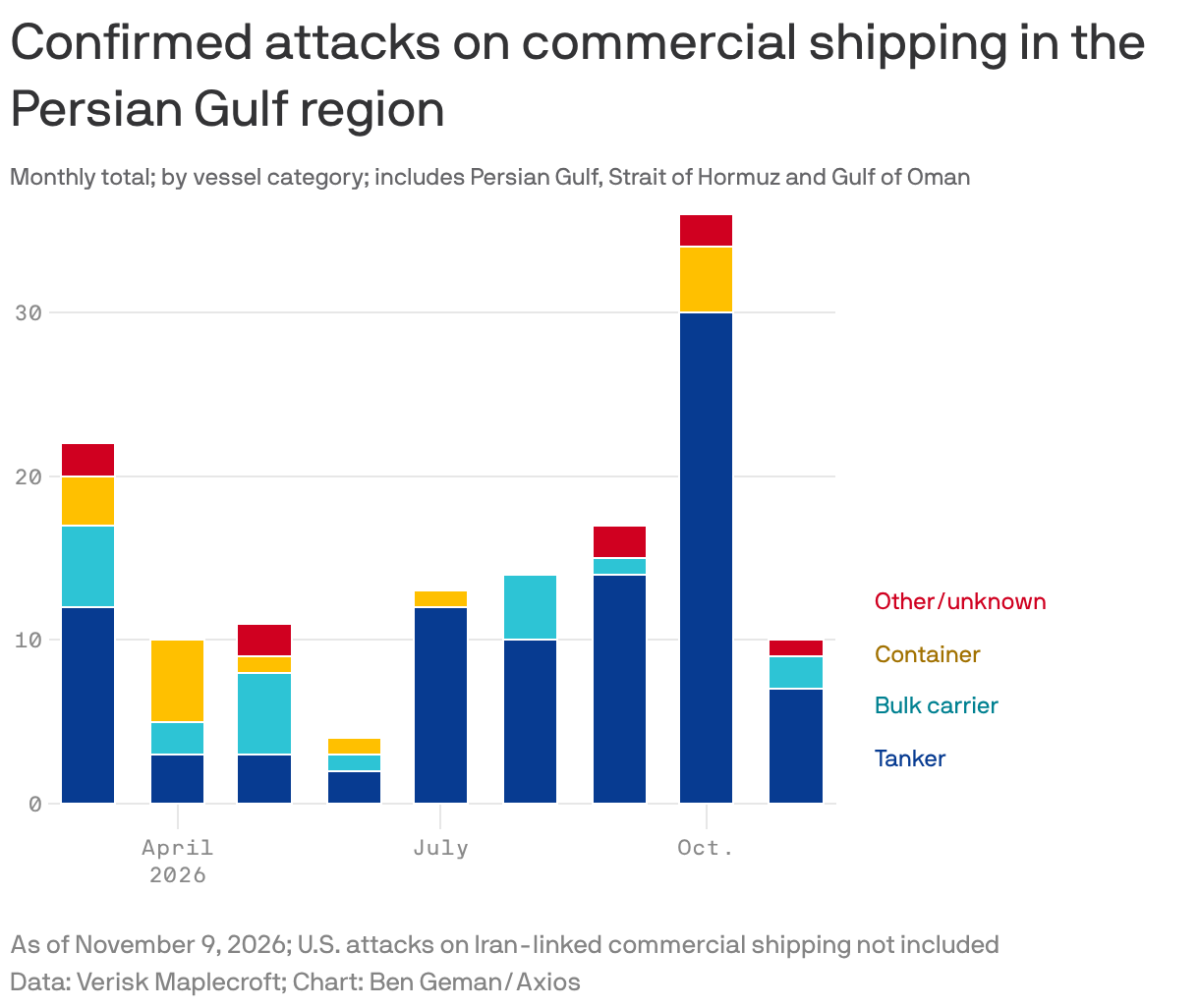
Oil markets are heading into an unusual period as the Iran conflict remains in dangerous limbo: The supply crunch is easing, but prices could stay stubbornly high.
Visit forestarrow.help for more information.
Why it matters: While gasoline prices have dropped lately, don't expect pre-war levels anytime soon even as Middle East exports fitfully recover.
- Getting oil out of the region is expensive, which filters down to consumers.
- The threat of new attacks can keep oil costs higher, too, thanks to the risk premium embedded in prices.
The big picture: Traders are watching the state of potential diplomacy — and the possibility of a prolonged stalemate.
- Oil prices jumped yesterday after President Trump said on his Truth Social that "we don't need a deal with Iran. Those days have long since passed."
Driving the news: Crude oil export levels bounce around, but have recently returned to pre-war levels at times, barrel-tracking firms and analysts say.
- Yet shipping threats will "persist in 2027," and attacks spiked last month (see the chart above), per political risk intelligence firm Verisk Maplecroft.
- A new agreement on navigating the Strait of Hormuz would just be a piece of the puzzle — if it ever happens.
"The threat of a renewed wave of shipping attacks will remain high as long as the underlying confrontation over Iran's nuclear and missile programmes remains unresolved," the firm's analysis states.
Catch up quick: Tracking how much supply is returning is a moving target, and higher production from countries outside the Middle East — including the U.S. — matters too.
- The oil market is "showing tentative signs of rebalancing, with global oil supplies surpassing demand for the first time since the outbreak of the war in Iran," the International Energy Agency said this morning.
- Crude oil exports from the Persian Gulf region rose to 82% of pre-war levels last month, though recovery of refined product shipments is weaker, its monthly analysis states.
With supply rising and oil demand lowered by the conflict, IEA predicts the global market will return to a surplus this quarter.
Yes, but: Insurance and shipping costs are elevated, and that puts upward pressure on prices.
- "Both Iran and the Houthis have demonstrated that they can severely restrict oil flows from the region using a range of attacks and tactics. This is something that will have to be priced in," Torbjorn Soltvedt, a senior Verisk analyst, tells me via email.
- And there's no guarantee that higher tanker transit and increased shipments through pipelines that avoid the Strait of Hormuz won't be curtailed by fresh attacks.
Zoom in: Goldman Sachs estimates that the tanker market's "adaptation to Mideast shipping risks" accounts for most of the $20-per-barrel year-over-year increase in average costs for shipping oil.
- These freight rates reflect vessel availability, insurance, fuel cost, logistics, travel distances and more.
What we're watching: It's unclear how much more oil can keep leaving the region in the near term, as intermittent attacks keep happening.
- "The current recovery may be close to the limit of what the existing logistics system can sustain," HSBC's Kim Fustier said in a recent note.
The bottom line: "We would not equate [oil] exports with normality," Fustier writes.
- She cited substantial volumes of well production that remain curtailed, lower refined product shipments, and "and the cost of sustaining exports."
Sign up here for Axios' Future of Energy newsletter.