Republicans pitch 3.5% income tax cap as an affordability fix in North Carolina—but Gov. Josh Stein says it won’t put ‘more money in anyone’s pockets’
· Fortune
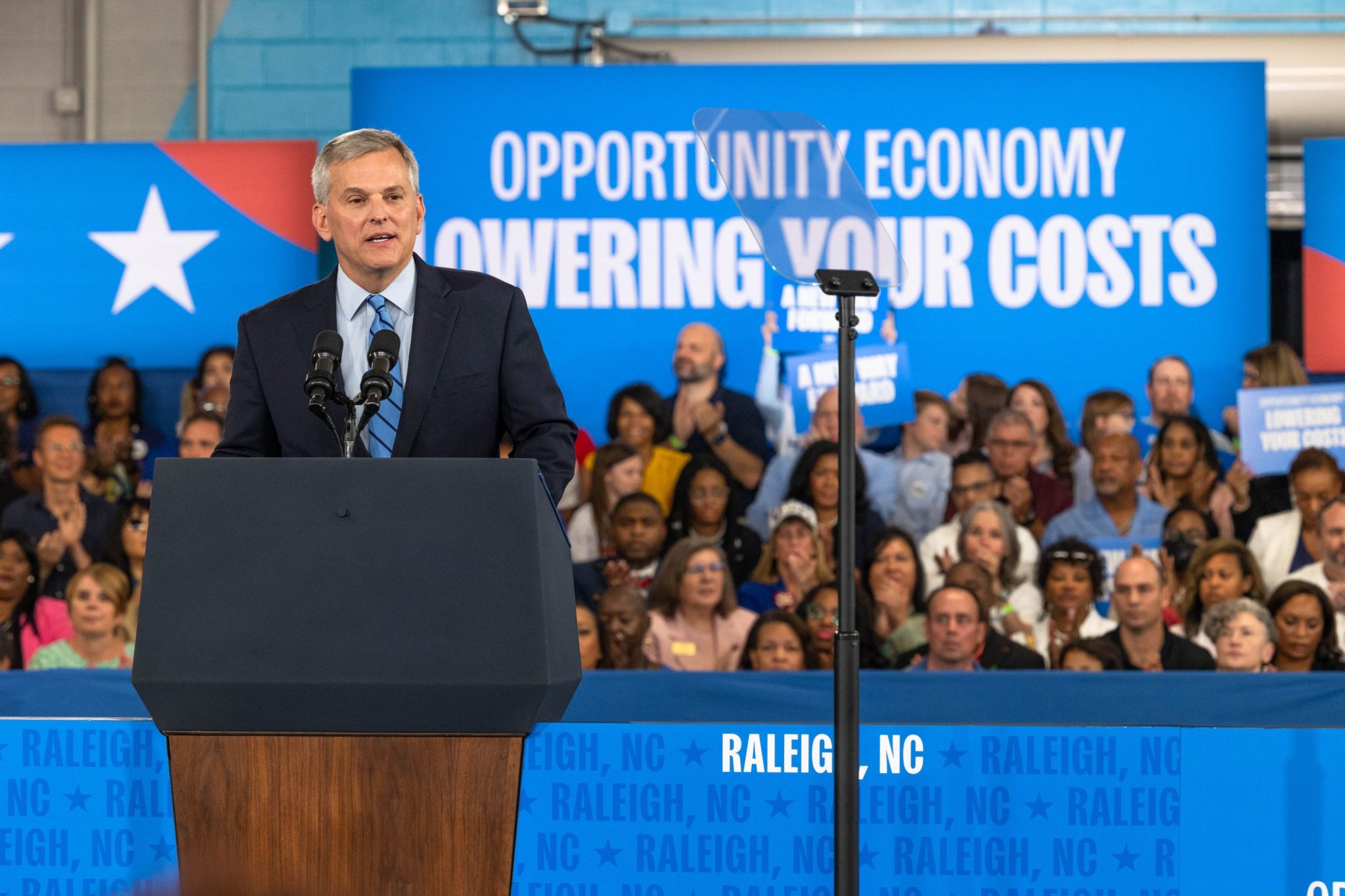
Republican lawmakers in North Carolina have steadily reduced the state’s income taxes for more than a decade. On Tuesday, voters will decide whether to make it harder for future lawmakers to reverse those cuts as affordability emerges as one of the biggest issues of the midterms.
Visit rouesnews.click for more information.
North Carolina voters are considering a constitutional amendment that would lower the maximum allowable income tax rate from 7% to 3.5%. This would halve the ceiling for what the state government can charge individuals and corporations through income taxes.
But despite the legislation’s name, “Lower Taxes for All NC,” the amendment wouldn’t actually lower state taxes immediately.
North Carolina’s individual income tax rate currently stands at 3.99%. Under legislation that has already passed, it is scheduled to fall to 3.49% in 2027. The rate is set to drop further to 3.24% in 2030 and 2.99% in 2033.
The measure facing voters Tuesday deals with the future. If approved, raising income taxes above 3.5% would require another constitutional amendment, which requires the approval of three-fifths of both chambers of the state legislature and then a majority of voters.
Supporters say the restriction would protect taxpayers from future tax increases, while critics warn it could leave the state with fewer options to raise money for public services during an economic downturn.
The measure is part of how the Republican-dominated state legislature is trying to tackle the rising cost of living, which 48% of registered voters identified as their top issue, according to a Reuters/Ipsos poll from Tuesday.
Across the country, voters are considering several competing tax initiatives as they grapple with how to address rising costs. Apart from the constitutional referendum to lower the cap on state income tax, North Carolina voters will also vote Tuesday on whether to allow the state legislature to impose a limit on how much local governments can raise property taxes.
Another nine income and wealth tax related measures are on the ballot in six states, according to Ballotpedia, including one of the most well known, Proposition 40, which would impose a one-time 5% wealth tax on individuals in California with a net worth of more than $1 billion.
What other tax cuts have Republicans made in North Carolina?
The North Carolina income tax amendment is just the latest reform aiming to cut taxes under the Republican-controlled legislature.
After years of Democratic control of the legislature, in 2010, Republicans won control of both chambers of the state’s General Assembly and have been in power since 2011. For years, Republicans in the legislature have held enough seats to enact their legislation even without the support of the two consecutive Democratic governors who have held the executive position since 2017.
Republicans have used this influence to slowly cut taxes.
Republican lawmakers in 2013 passed a tax reform that changed the state from a system of graduated individual income tax brackets to a flat tax. They have also reduced corporate taxes.
In 2018, North Carolina voters approved a constitutional amendment lowering the maximum allowable income tax rate from 10% to 7%, with less than 60% of voters supporting the proposal.
The latest amendment on the ballot Tuesday would cut that limit in half again to 3.5%. To get on the ballot, the measure has already passed the Republican-controlled state Senate and House. Democratic Gov. Josh Stein was not required to approve of the measure because governors in North Carolina can’t veto proposed constitutional amendments.
Still, Stein has made it clear he opposes the proposed amendment, saying in a press conference from May the initiative would allow the legislature to cut taxes for wealthy individuals while raising pressure to increase the state’s sales tax to make up the revenue short fall.
“It will not put any more money in anyone’s pockets,” Stein said. “But what it will do is make regular people pay the consequences of it next year and years into the future because it will insulate the very wealthy from ever having an increase in their income tax.”
Stein also pointed out that because the amendment is in the state constitution it will be harder for future legislatures to change later.
Republican state Sen. Michael Lee, a sponsor of the legislation that put the income tax cap on the ballot, has said the restriction would build on the legislature’s previous actions to lower taxes.
“Our tax reforms have produced more than a decade of strong revenue growth while letting people keep more of what they earn, and this amendment locks in that progress,” Lee said in a statement earlier this year to North Carolina news station WECT.
Revenue at stake
Yet, the measure raises questions about how North Carolina would pay for government services, and what services may need to be cut if income tax revenue falls.
The state collected approximately $17 billion in individual income taxes during the 2024-25 fiscal year, accounting for nearly half of its $34.6 billion in General Fund revenue, according to the North Carolina Office of State Budget and Management.
That money helps fund public education, health care, and other government services. The amendment won’t reduce tax revenue immediately, but opponents say that making future income tax increases harder would make lawmakers more likely to either cut services or raise revenue elsewhere, including through higher sales taxes.
Alexandra Sirota, executive director of the NC Budget & Tax Center, has also warned that restricting income taxes could limit how the government adapts to changing conditions in the economy.
“These tax amendments won’t cut anyone’s taxes,” Sirota said in a September statement. “But they would make it more difficult for future lawmakers to fairly raise the revenue needed to meet costs through a higher rate on millionaires, billionaires, and highly profitable corporations.”
National debate
North Carolina isn’t the only state reconsidering how much its government should be allowed to tax residents and businesses.
Voters in Colorado will vote Tuesday on competing proposals that will either replace the state’s 4.4% flat income tax with a graduated tax rate reaching up to 8.4% or one that will cap income tax rates at 4.4%. In Iowa, voters are weighing a measure requiring a two-thirds legislative majority to increase income taxes. Washington voters will also decide whether to repeal a newly enacted 9.9% income tax on household income exceeding $1 million.
California voters, meanwhile, are set to weigh in on one of the most contentious ballot measures up for a vote Tuesday—a 5% tax on billionaires’ wealth that has been opposed by well-known figures such as Google cofounder Sergey Brin.
The proposals across the country come as voters are struggling to afford what they could before as inflation surged to 3.6% in September, up from 3.4% in August, according to the Commerce Department. Meanwhile, the war in Iran, which has pushed up the price of oil about 68% over the past year, has partly led to price increases by pushing the prices for products reliant on gas for their production or distribution higher.
Polls show Democrats have gained traction even in some deeply red states as they emphasize how Republicans in power have fallen short on tackling affordability. In Texas, polls show former Republican attorney general Ken Paxton slightly behind Democrat James Talarico in a Senate race that faces long odds given no Democrat has won statewide office in Texas since 1994. In Michigan, Dr. Abdul El-Sayed holds a double digit lead over Republican opponent Mike Rogers in another closely watched Senate contest.
Still, Republicans have tried to alleviate voters’ concerns about affordability at the national level, where GOP members control both chambers of Congress. Republicans earlier this year helped push through the 21st Century Road to Housing Act, a piece of bipartisan legislation aimed at tackling high housing costs including by accelerating homebuilding and reforming zoning.
This story was originally featured on Fortune.com