Maharashtra's 12-Point Relief Package For Drought-Hit Farmers Falls Short Of Addressing Crisis, Say Activists
· Free Press Journal
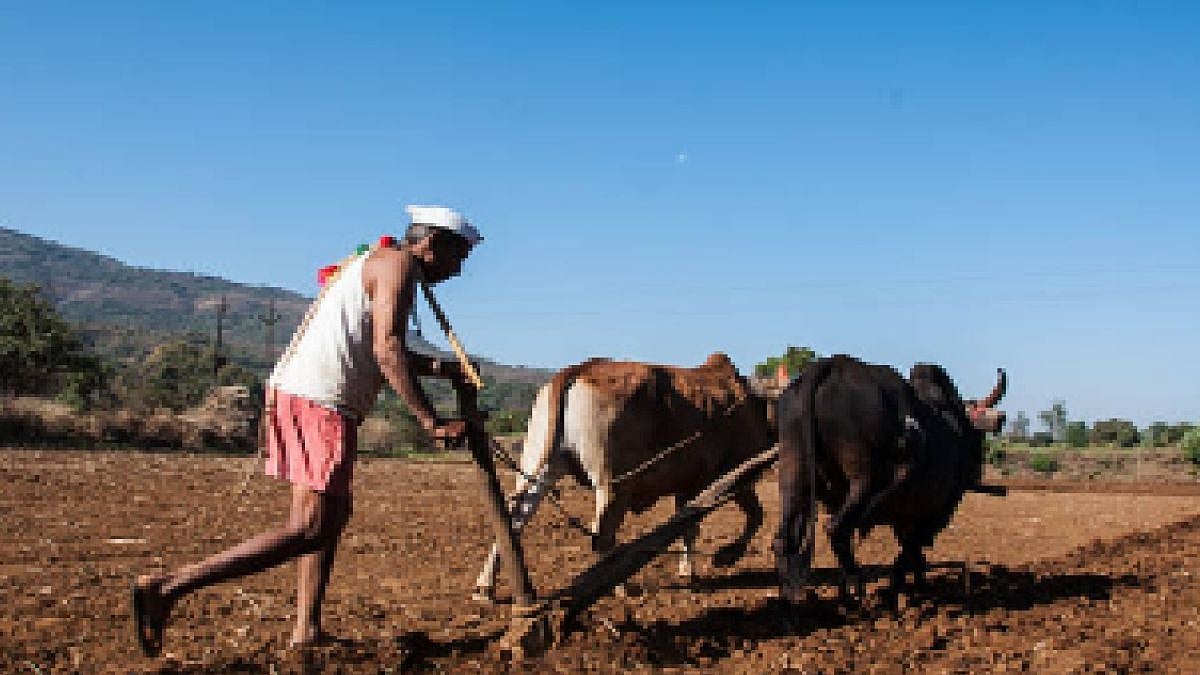
The Maharashtra government last week declared a drought in 305 out of the state’s 358 talukas, in the backdrop of a 19 per cent monsoon deficit and the prospect of El Niño conditions intensifying. The state government has stated that it will implement 12 relief measures in these talukas with the aim of providing assistance to farmers facing the impact of deficient rainfall.
Visit newsbetting.club for more information.
However, activists and agricultural experts told the Free Press Journal that given the magnitude of the agricultural crisis and the financial pressures on farmers, the measures announced would not be enough to provide succour to cultivators. They also contended that a Rs 5,000 advance assistance to be given to farmers before the festival of Diwali was too meagre.
List of measures
The Maharashtra government listed out drought relief measures to be implemented in the 305 identified talukas in a government resolution on October 14. They include land revenue exemption, crop loan restructuring, a stay on agricultural loan recovery, waiver of school and college examination fees and relaxation of norms under the Viksit Bharat - Guarantee for Rozgar and Ajeevika Mission (Gramin) scheme.
The Maharashtra government listed out the measures it will take in drought-hit talukas in a government resolution last week.Maharashtra Chief Minister Devendra Fadnavis also announced assistance of Rs 5,000 for drought-hit farmers ahead of Diwali. He said at a media interaction on Wednesday that the decision to provide advance assistance was taken as the procedure for obtaining drought assistance from the Centre is not likely to be completed before Diwali.
“This decision was made so that farmers have some money in hand during Diwali,” Fadnavis said.
Measures won’t be enough, claim activists
Notwithstanding the state government’s claims, activists and farm experts questioned the adequacy of the relief measures that have been set out.
Anil Ghanwat, farmer leader and head of the organisation Shetkari Sanghatana, told the Free Press Journal that only some of the 12 relief measures would actually help improve the farmers’ situation.
“The provisions that will provide some relief are the stay on recovery of agricultural loans and the prohibition on cutting off power supply for agricultural pumps,” he said. “On restructuring of crop loans, it is seen that often, the government and the banks are not on the same page, and farmers only get partial relief. In any case, farmers are in such a dire financial condition that merely restructuring the loan will not ease their financial burden.”
Ghanwat opined that the provision on exam fees would also not be very useful, as school education is free of cost in any case. “Several ‘relief measures’ listed by the government are not very substantial, and it appears as if they have been included only so that it appears that the list of actions is longer.”
‘Are farmers expected to starve to death?’: Activist
Kishor Tiwari, farm activist and former chairperson of a Maharashtra government task force on agrarian distress, said he was not convinced by the state government’s reasoning that the advance amount of Rs 5,000 was announced as the procedure for obtaining drought assistance from the government would take time.
Tiwari said that the state must provide clarity on the extent of financial relief sought from the Centre, and the drought-hit area that has been inspected by the Union government till now.
“The farmers’ crisis is an immediate one,” the activist told the Free Press Journal. “Are the farmers expected to starve to death till the administrative procedures of the Centre and state governments are completed?”
Last week, Shiv Sena (UBT) MLA Kailas Patil had also said that the advance amount of Rs 5,000 was too little. Patil had questioned why the state government was describing the measure as "advance assistance", even though 81 per cent panchnamas had been carried out, the authorities had carried out surveys of farms and dams, and the government had promised to provide assistance to all farmers.